
From The Bookshelf:
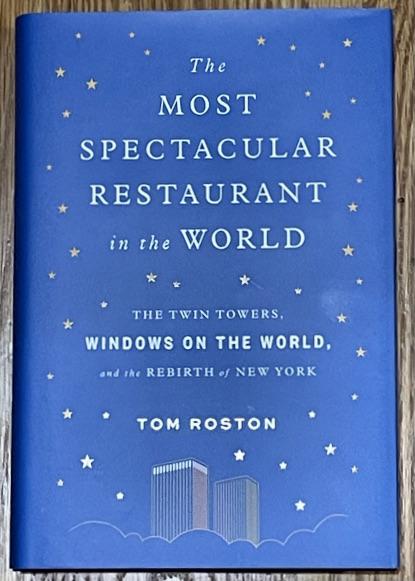
The Most Spectacular Restaurant in the Word:
The Twin Towers Windows on the World and the Rebirth of New York
by Tom Rostand
“I’m a New Yorker and growing up in New York in the 1970s, everyone was aware of these strange file cabinets at the end of, the end of the borough that were going up. I was a little young when they were going up but once they were up everyone knows about it because you either went or you thought about going. -Author Tom Roston from an interview with Booksaboutfood.com
I was hesitant to read this book. Because let’s face it we all know how it ends…not happily.
But the start of things has become a little obscured with the passage of time. So how did a restaurant emerge up there in the clouds?
In the late 1970’s New York city was not in a good place. The city was pulling itself out of the near bankruptcy it faced. The violence and the looting that occurred during the blackout of july 1977 seemed a good analogy for just where the city was.
For New Yorkers of a certain age the twin towers of the world trade center were more than just a couple of tall (at one point the world’s tallest) buildings at the far end of the island. But on the top of one of the buildings was a place that represented all that New York was. More importantly it represented a glimmer of hope for what the city could be again.
So just how do you build a restaurant at the top of the tallest building (North Tower) in the world? Answer not very easily. Roston builds the story from the ground up. Starting with the concept of building such a complex. The engineering issues, the politics personal and public are all well documented.
Then there is the issue of actually creating a restaurant. The original concept called for the running of a gas line up 107 stories. Con Ed refused that idea. Leaving the obvious question of how to cook? Who’s going to be cooking? And what goes wrong with the fish? Are just an inceling of the many questions and challenges that needed to be answered to get the place up and running.
But when they got it up. They got it up. When things were finished they had something that was more than a spot just for tourists. They had undoubtedly created a place with the most dramatic views of any other restaurant. The food was, for a while, world class. The wine list was legendary. The clientele were some of the same who were part of the scene at Studio 54. It helped usher in the new glitz and glam of the 1980’s. Things weren’t perfect, they never are. Eventually the standards started to change as did the clientele. This was addressed with a rebirth in the late 90’s.
Roston paints a picture of not just a glamorous restaurant and it’s ups and downs but the people who worked there. The reader gets to know some of the staff and the characters who made the place run and how they ran it. Giving one a real sense of having been there. He has managed to create a sense of intimacy and family. That one probably never considered it was there when thinking about such an iconic destination.
In doing so Roston causes the reader to feel the sense of loss following the September 11th attack. Just who was lost and what happened to their families. It is not sensationalist writing. He respected people’s privacy.
The building of the towers ushering a new era for The City. The restaurant was a destination that brought people into lower Manhattan. The tower’s demise brutally brought in a new era. But in between these there was a restaurant that will long be remembered.
You can read my full interview with Tom Roston at Booksaboutfood.com